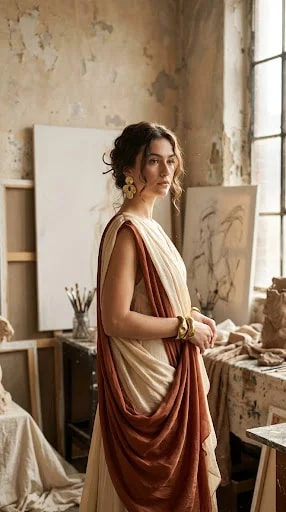
There is a particular kind of dressing that looks like it happened by accident and could not be improved by a stylist. A cream fabric gathered over one shoulder, a rust sash knotted low, a bangle wide enough to be a small piece of architecture. Nothing competes. Everything belongs to the same sentence. This is the quiet grammar of muse fashion style, and it is far more deliberate than the soft-focus photographs suggest.
The first rule is subtraction. Look at how the outfit resolves: one bare shoulder, one draped plane of fabric, one flash of terracotta at the waist. The earrings are sculptural and gold, floral in shape but restrained in size, and the bangle repeats the metal without echoing the flower. That is the whole accessory story. When you build a look around a single strong gesture, every additional piece has to justify itself, and most will not. Try removing one thing before you leave the room and see whether the silhouette gets clearer.
The second rule is that the palette should feel dug up rather than bought. Cream the color of unprimed canvas, ochre, faded plaster, the burnt orange of a sash that could have been dyed in a bucket. These are colors that sit comfortably beside wood, linen, dust, and old walls, which is why they photograph so well in a working studio and why they travel so easily into ordinary life. Build a base of two neutrals with a single warm accent, then let the gold do the shining. Terracotta against cream will carry almost any skin tone, and it never looks like it is trying too hard.
Texture is the third ingredient, and the one most often skipped. A drape only reads as a drape when the cloth has weight, something with enough body to hold a fold across the shoulder and fall cleanly at the hip. Pair that softness with something harder, like a metal bangle or a stiff leather sandal, and the outfit gains structure without gaining fuss. The same logic applies to the hair and the face: loose, slightly undone, lit by whatever window is nearest.
Finally, there is the posture. The woman in the frame is turning away and looking back, which is the oldest trick in portraiture and the most flattering way to wear a one-shoulder anything. Confidence in muse style does not come from the garment; it comes from the ease of someone who dressed for a room rather than for an audience. Wear the drape, keep the jewelry singular, choose colors the walls would recognize, and let the rest stay unfinished.