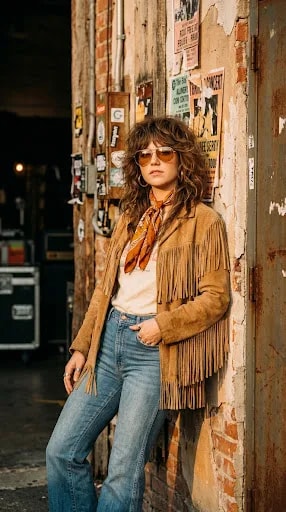
Most vintage street portraits live or die by the wall behind them, and this one knows it. The brick is patched with peeling plaster, layered with torn flyers, stickers and a rusted utility box, and at the left edge a dark doorway swallows a stack of road cases. That backdrop is not decoration; it is a styling brief. The grit of the setting tells you exactly how far the clothes should go and, more importantly, where to stop. Nothing here is precious. Nothing is dry-cleaned. The wall sets the register, and the outfit answers in the same key.
The anchor is a tan suede fringe jacket, cropped at the hip and worn soft enough to look inherited rather than bought. Fringe works when it moves, so the cut matters more than the trim: a shorter body keeps the silhouette from drowning, and the suede should carry a little fade at the elbows and cuffs. Over a plain cream top, the jacket gets to be the loudest thing in the frame without a single logo. This is the difference between a rock muse and a costume, and it is almost entirely about restraint in the pieces surrounding the fringe.
From there, the accessories do quiet, deliberate work. A rust-and-orange patterned neckerchief knotted close at the throat picks up the brick tones in the background and adds the one jolt of warm print the look needs. Aviators stay small and metal-framed rather than oversized, and gold hoops catch the side light without competing. Three accents, one palette. If the scarf is patterned, the sunglasses are plain; if the hoops are big, the neck stays mostly bare. The crease at the collar of the cream top, half-tucked and slightly rumpled, is doing as much for the mood as anything hanging in the closet.
Flared blue jeans finish the job, faded at the thigh and long enough to break over a boot or a stacked heel. One hand pushed into the pocket is the whole styling trick: it drops a shoulder, softens the stance and makes a posed portrait read as a moment between soundchecks. When you shoot a look like this, put the subject against texture and let warm, low, raking light do the rest. A slightly wide lens keeps the alley intimate instead of monumental.
The takeaway is portable. Find a wall with history, build the outfit around one honest vintage piece, keep the palette to caramel, cream and rust, and leave the rest a little imperfect. That is how a 1970s backstage alley gets rebuilt on any street corner you happen to be standing on.