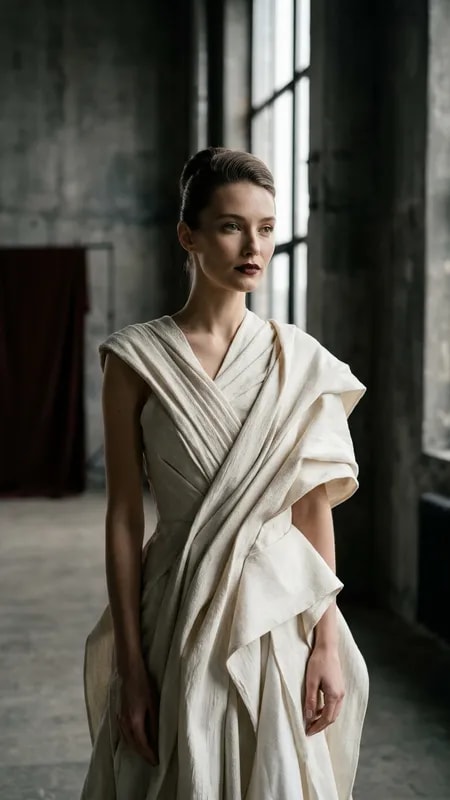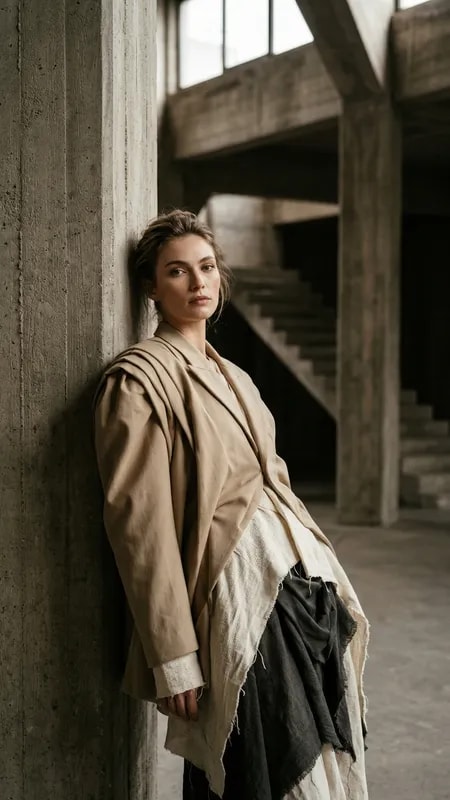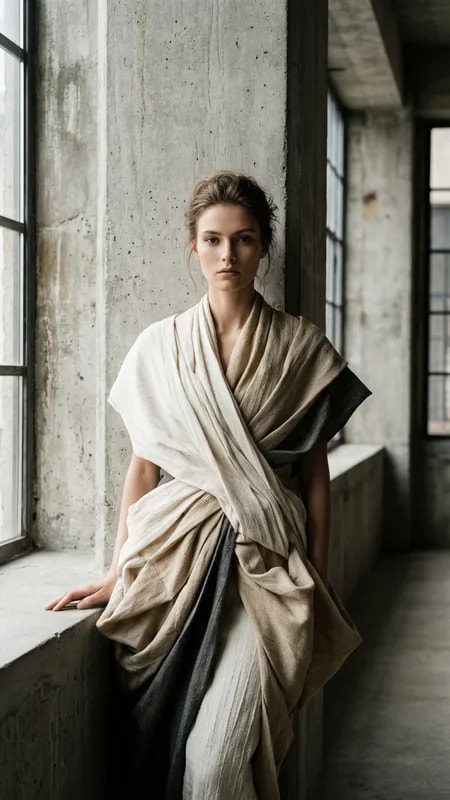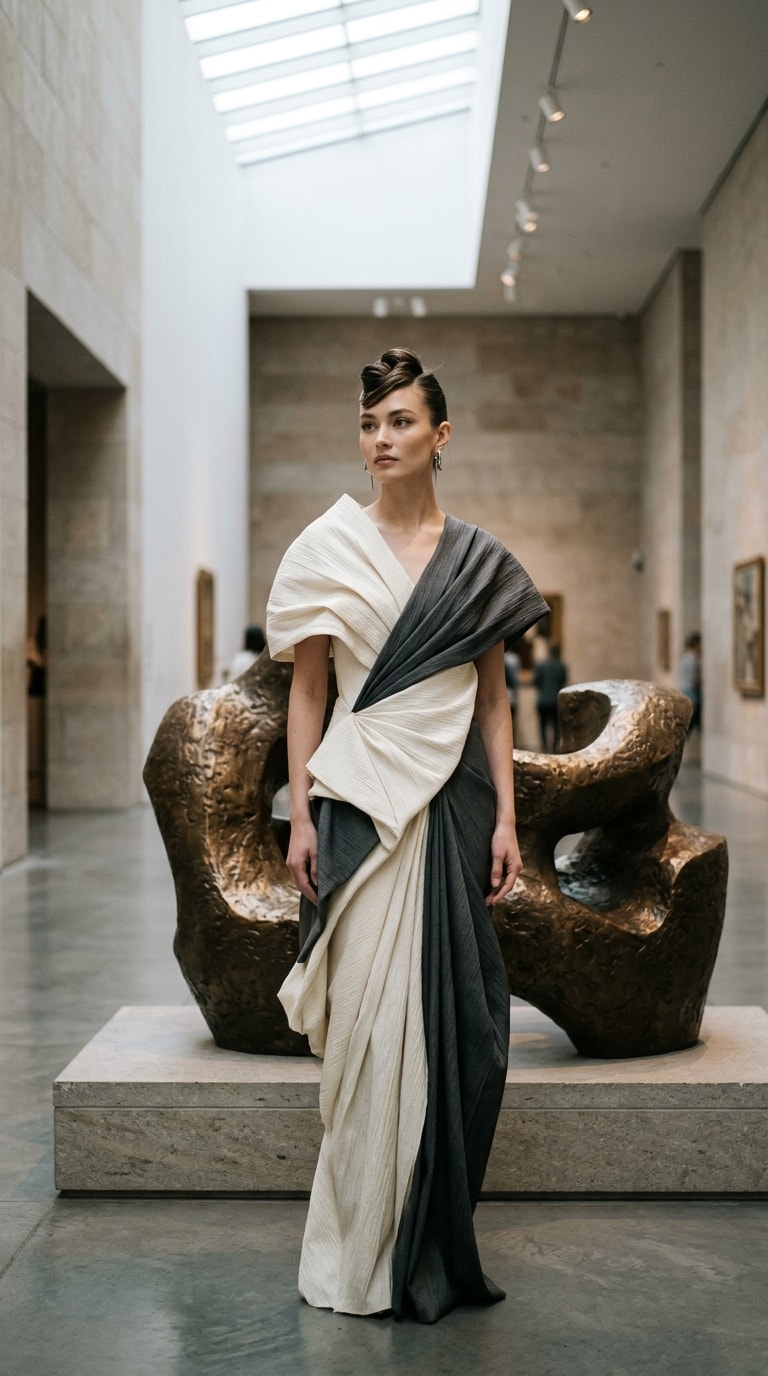
Most editorial shoots chase movement. This one plants its feet. The model stands dead center in a grand gallery, camera at eye level, the frame divided into near-perfect halves by her body and the bronze-toned sculpture rising behind her. Nothing tilts, nothing crowds the edge. That restraint is the whole trick: when a composition refuses to fidget, the eye has nowhere to go but the garment, and the garment gets to behave like architecture.
The gown rewards the decision. Ivory and charcoal panels drape asymmetrically across the torso, so the only real diagonal in the picture is fabric, not framing. Against a massive abstract sculpture of warm bronze, the dress reads as a second, softer sculpture — one that curves where the metal folds and falls slack where the metal stays dense. The palette does quiet work here too: creams, beiges, deep greys, no color loud enough to compete. Texture becomes the subject. You notice the weave catching the skylight before you notice anything else.
Lighting is doing the same job as the composition. Diffused daylight from above, supplemented by track spots, wraps the figure without casting the hard shadow that would flatten the sculpture's curves. The result feels like medium format: razor-sharp on the subject, softly dissolved at the edges. That shallow focus matters more than it might seem. Blurred museum-goers drift through the background, and because they are unreadable, they function as texture rather than interruption — proof of a public space, withheld as noise. The model gets the stillness; the crowd gets the blur.
Styling choices support the symmetry rather than fighting it. Hair is controlled, the neckline is clean, and the accessories step back so the draping can lead. Even the pose is architectural: shoulders squared to the lens, weight settled, chin level. Her calm is what sells the scale of the room. A more animated gesture would have made the sculpture a backdrop. This stillness makes it a partner in conversation.
There is a practical lesson for anyone shooting fashion in a museum. Grand spaces tempt you to go wide and dramatic, to let the architecture loom. Centering instead creates a spine, and a spine lets everything else loosen — the tilt of a hem, the drift of a visitor, the soft fall-off of light at the frame's edge. The museum doesn't need to shout. Neither does the dress. Put the figure on the axis, keep the camera level, and let fabric and bronze negotiate the rest.