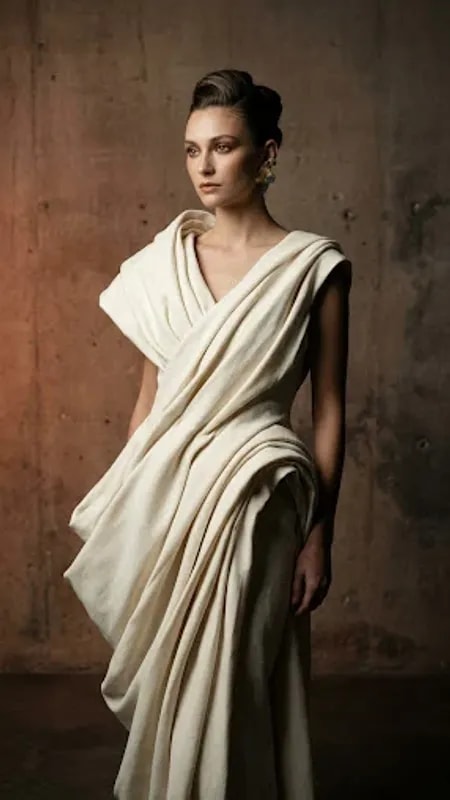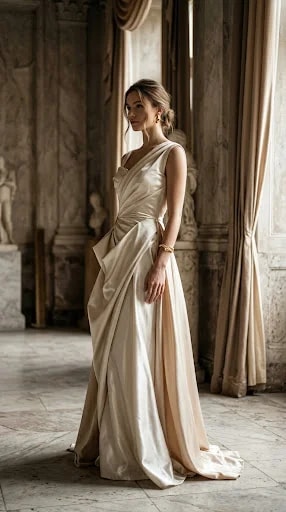
Some rooms ask you to whisper. This one — with its marble floor veined like river ice, its columns standing in for trees, its tall taupe curtains holding back a wash of daylight — does exactly that. The woman in the champagne silk gown doesn't fill the frame so much as inhabit it. She stands slightly left of center, gazing off toward the window light, and the picture's whole argument is made by what surrounds her: air, stone, and a silence you can almost hear.
Negative space is the most underrated luxury signal in fashion image-making. A crop that stops at the collarbone shouts; a full-length frame with generous architectural breathing room simply waits. The distinction matters because quiet luxury is less about the garment than about the confidence to leave things empty. Here the columns and the half-seen statues are not props competing for attention — they corroborate. They tell you this woman belongs to rooms with histories, and they let her remain the only soft thing in a hard-surfaced world.
Then there is the dress, and the way it argues with its setting. Marble is carved; silk is negotiated, moment to moment, with gravity. The asymmetric draped bodice folds across the torso like a decision made quickly and then kept, the gathered waist holds the silhouette in check, and the side train spills just far enough to suggest motion the photograph has paused. Diffused light arriving from the right does the rest, laying a pale sheen along one shoulder and letting the other side fall into warm taupe shadow. An 85mm lens keeps the proportions honest and softens the background into suggestion rather than inventory.
Her gaze is the quietest choice of all. She looks away, past the frame, at something we are not shown, and that small refusal is what turns a portrait into a mood. We are allowed to watch; we are not invited to interrupt. It is the oldest trick in the muse's repertoire and still the most effective: intimacy held at exactly one arm's length.
Worth stealing for your own frames — resist the urge to crop in, let architecture carry half the story, dress the subject in a tone that repeats the walls, and give her somewhere else to look. The result won't shout. It will linger.