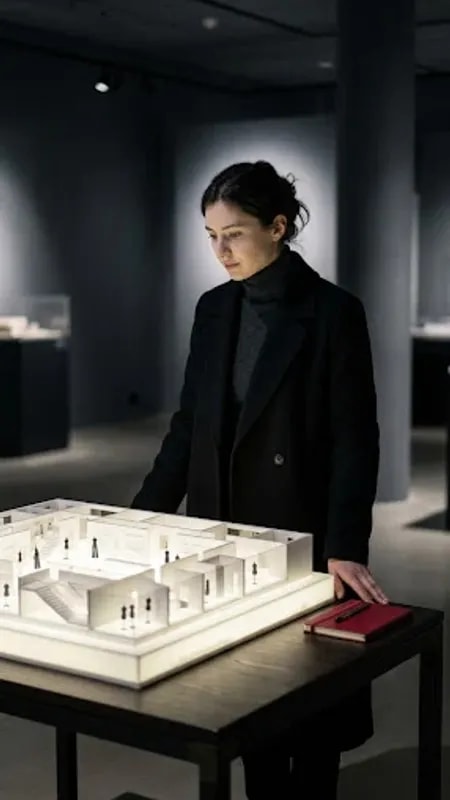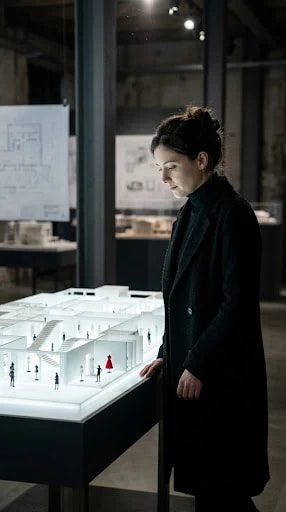
The model glows like a lantern in a dim studio, and the eye goes straight to the one thing that does not belong: a figure in a red dress, no taller than a fingernail, standing at the foot of a miniature staircase. Everything around it is white card, grey shadow, and the cool geometry of a fashion museum floor plan. The red is not decoration. It is a measurement, a provocation, and a promise all at once.
Architects call these little inhabitants scale figures, and they are usually an afterthought, stamped in by the dozen to keep a rendering from feeling like a morgue. Here, one has been singled out and painted a colour that refuses to be ignored. That choice does quiet, precise work. It tells the viewer where a visitor's body will actually stand, how a gown will read against a wall, how much air a person needs before a garment stops being an object and starts being an encounter. A floor plan can describe circulation and square metres; only a body can describe awe.
The woman leaning toward the model understands this instinctively. Her black coat, her pulled-back hair, the way her face is lit only by the model itself, all of it frames a private moment of rehearsal. She is not checking dimensions. She is walking the route in her head, following that red figure up the stair, around the landing, into whatever room comes next. Curators do this constantly, and the model is the closest they get to being inside the exhibition before a single wall goes up. The blueprints pinned behind her are accurate and completely silent. The model is the one that talks back.
There is a practical lesson buried in that contrast. When a fashion museum floor plan is tested only on paper, the mistakes that survive are human ones: a mannequin placed where visitors bunch up, a sightline broken by a structural column, a dramatic reveal that arrives three rooms too early. Add a scale figure and the errors become obvious, because you can suddenly see the visitor's height, their pace, their field of view. The red dress turns an abstraction into a witness.
Look again at the glow on her face and the small crowd of grey figures surrounding the one in colour. The whole scene is really about the gap between drawing and experience, and how a museum closes it. Someone has to stand in the room before the room exists. In this studio, at this hour, that job belongs to a figure in red, and to the woman watching her take the first step.