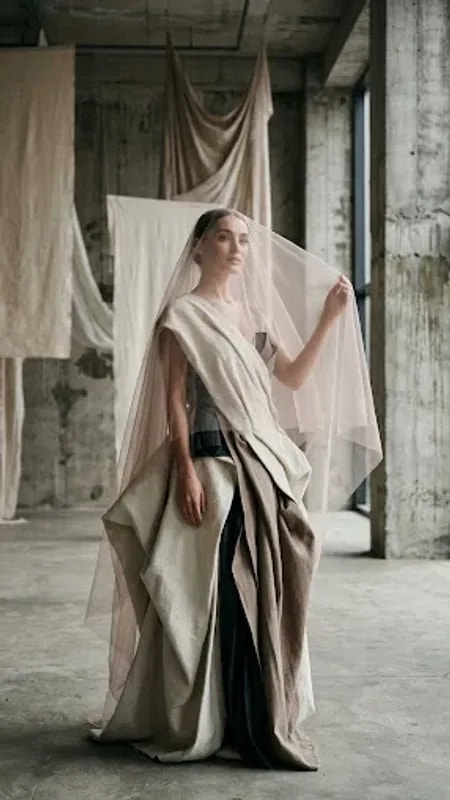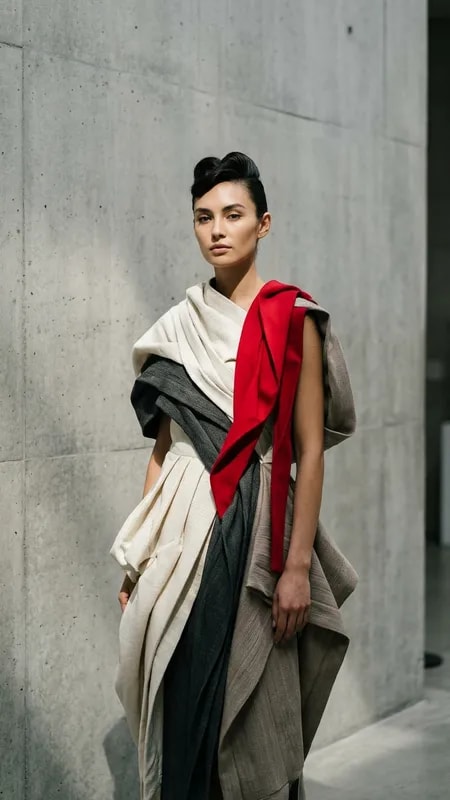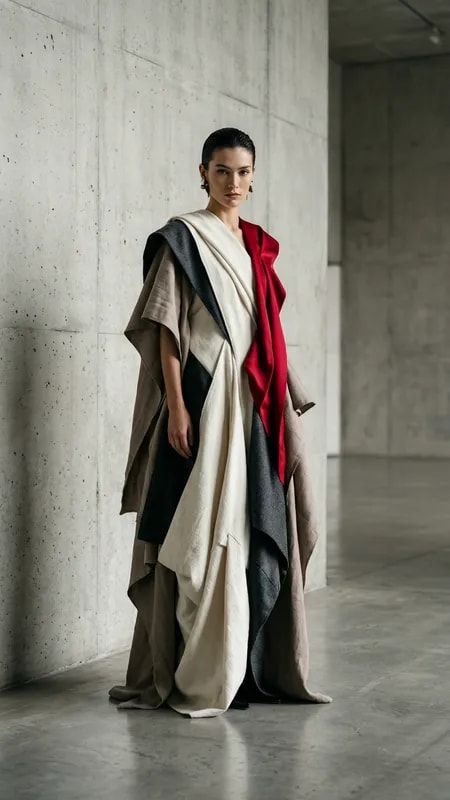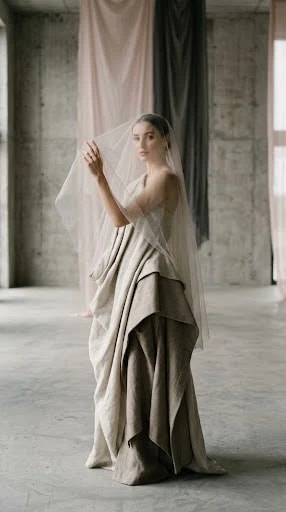
There is a particular kind of power in a garment that refuses to shout. Muse core fashion lives in that restraint — the taupe linen gown that falls in long, deliberate folds, its weight doing the work that embellishment usually does. Standing in a cavernous concrete hall, the model becomes both statue and inhabitant, her silhouette drawn in soft earthen tones against a floor scuffed by years of industry. Nothing here sparkles. Everything here holds.
The styling is where the mood sharpens. A sheer tulle veil, gathered loosely in the hands rather than pinned to the hair, reads as an offering instead of an accessory. It softens the severity of the gown and gives the frame its melancholy center, that direct and unguarded gaze meeting the lens as though the room were empty. Blush pink and charcoal backdrops sweep upward behind her like unfinished scenery, theatrical yet unfinished, reminding us that muse core never pretends to be a finished thought. It is a mood caught mid-breath.
Texture carries the narrative. Raw concrete offers grit and cool grey neutrality; the linen answers with warmth and grain; the tulle adds a transparency that keeps the whole composition from turning heavy. Diffused daylight spilling from the right grazes each surface differently, so the eye travels from the sharp weave of the bodice to the blurred fall of fabric in the background. This is editorial restraint at its most photographable — a palette of beige, stone, and dusty rose that photographs beautifully in natural light and translates effortlessly into a wardrobe of oatmeal knits, dove-grey tailoring, and unstructured layers in washed silk.
To wear muse core is to accept a slower kind of dressing. Choose pieces with architectural drape and let volume replace ornament. Keep the palette narrow and the textures rich. Add one translucent layer — a gauze overshirt, a chiffon scarf — to break the solidity. Then find a setting with a little rawness to it, a concrete stairwell or an empty studio, because this aesthetic thrives on contrast between the refined and the unrepaired. What remains is quiet reverence: the sense that beauty does not need an audience, only space enough to stand in.